AI Agents & MCP
Agent orchestration and tool-calling workflows that connect language models with structured domain data and business systems through MCP integrations.
LangChain · LangGraph · Model Context Protocol
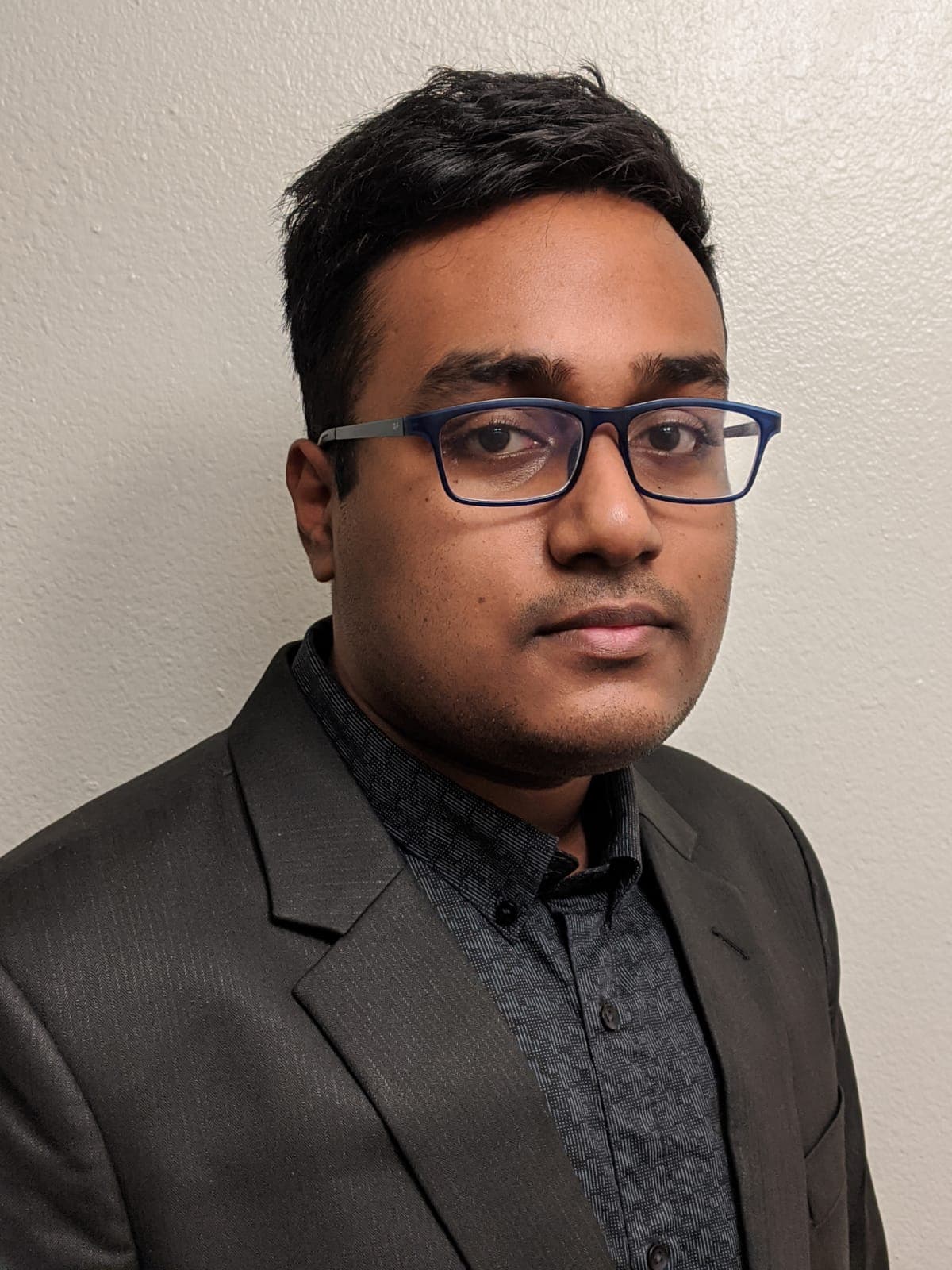
Agentic AI & LLMs · AI Engineering · Adversarial AI
Ph.D. candidate · Boise State University
Seeking AI Engineer & Forward Deployed Engineer opportunities



Generative AI · Agentic systems · Enterprise RAG · Adversarial robustness
I am an AI/ML engineer and Ph.D. candidate in Computing, with a Computer Science emphasis, at Boise State University. My focus is generative AI, tool-using agents, retrieval-augmented generation, and adversarial robustness. I work across the AI development lifecycle—from data pipelines and model experimentation to agent orchestration, APIs, evaluation, and deployment.
My recent engineering work includes an enterprise agentic RAG system for retrieving, analyzing, and comparing 15,000+ agricultural product labels. I combined LangGraph and LangChain orchestration with multi-source retrieval, LLM-based reranking, and MCP tools connecting agents to structured data and business systems. Label-comparison workflows, LangSmith evaluation and observability, and guardrails supported recommendations grounded in active ingredients, application constraints, location, and inventory.
Beyond LLM orchestration, I have developed Azure and Databricks pipelines for more than one million social-media interactions and applied sentiment and stance analysis to autonomous-vehicle public opinion. My software engineering experience includes Python APIs, cloud-hosted document automation, backend database integration, and Docker/Kubernetes deployment. I work with domain experts to turn business requirements into AI workflows and deliver iteratively through Agile development.
My PhD research at Boise State University's AI-based Security Lab focuses on human-centered AI robustness, adversarial NLP, and information credibility. I develop LLM-crafted credibility-drift attacks that manipulate linguistic, stylistic, and source-credibility cues to influence perceived news believability while preserving semantic similarity. My work includes developing LLM-based proxy models (ICL and COLA), evaluating adversarial attack effectiveness, investigating offline reinforcement learning-based defenses, and conducting human-subject studies to assess how AI-generated transformations affect credibility judgments and reasoning. I also develop graph neural network models integrating human believability signals to improve information reliability assessment. My broader research spans adversarial robustness, human-centered AI, and graph learning, with publications at WSDM, CSCW, ICWSM, and ASONAM.
Agent workflows, grounded retrieval, robust evaluation, and practical deployment.
Agent orchestration and tool-calling workflows that connect language models with structured domain data and business systems through MCP integrations.
LangChain · LangGraph · Model Context Protocol
Multi-source document retrieval and LLM-based reranking for grounded applications. My toolkit includes embeddings, vector databases, semantic and hybrid search, and domain-aware retrieval.
Multi-source retrieval · Embeddings · LLM reranking
LangSmith evaluation and observability, guardrails, and comparison workflows that make agent behavior and recommendations traceable to source context.
LangSmith · Guardrails · LLM evaluation
LLM-crafted credibility-drift attacks, linguistic manipulation, robustness evaluation, and reinforcement learning–based defenses.
Adversarial NLP · LLaMA · PyTorch
Python APIs, document automation, database integration, and containerized AI services. Taking model capabilities through application delivery and cloud deployment.
Python · FastAPI / Flask · Docker · Kubernetes
Translating stakeholder requirements into data, retrieval, and agent workflows. Integrating business systems and delivering iteratively with domain experts.
MCP integrations · Agile · Azure DevOps
Supporting Engineering Stack
Python · SQL · JavaScript · C# · PySpark · Databricks · Azure · AWS · GCP · Docker · Kubernetes · MLflow · FastAPI · Flask · React · Angular · PostgreSQL · CI/CD · PyTorch · scikit-learn
Agentic retrieval, LLM applications, adversarial evaluation, and supporting engineering work.
Research in language models, credibility, social computing, and human–AI interaction.
How meaning-preserving LLM rewrites can shift perceived news credibility.
LLM-based sentiment analysis for understanding public perceptions of autonomous vehicles.
Connecting human believability judgments, news content, and graph-based modeling.
Exploring linguistic ambivalence and its relationship to news credibility and diffusion.
Early detection of coordinated identities through linguistic and behavioral signals.
Designing search experiences with children to encourage meaningful interaction.
Professional experience spanning AI engineering, software development, data engineering, and applied research.
2021 — PRESENT
AI-based Security Lab · Boise State University
Research on LLM-crafted credibility-drift attacks, reproducible adversarial evaluation, and reinforcement learning–based defenses. Developed NLP and graph-learning approaches to news believability, including graph-based modeling that improved classification accuracy from approximately 80% to 87%.
MAY — AUG 2026
Simplot
Built an enterprise agentic RAG workflow across 15,000+ product labels using LangChain, LangGraph, and MCP tools. Developed label-comparison agents with LangSmith observability and guardrails, then containerized AI services with Docker and Kubernetes. Translated domain requirements into engineering tasks through Agile delivery and Azure DevOps.
MAY — AUG 2025
National Laboratory of the Rockies (NLR)
Developed Azure and Databricks pipelines for 1M+ social-media interactions, using LLM-based sentiment analysis to study public perceptions of autonomous vehicles.
MAY — AUG 2024
Idaho Transportation Department
Applied YOLOv8 and U-Net-based computer vision to pavement segregation, achieving 90% accuracy. Built Flask, Google Cloud, OCR, and backend data workflows.
2018 — 2020
Civil Engineering Department · Boise State University
Developed data-driven fraud-detection pipelines and statistical tools for construction quality assurance.
2022 — PRESENT
Boise State University
Computer Science emphasis. Research in human-centered AI robustness, adversarial NLP, and information credibility.
2020 — 2022
Boise State University
Graduate study in computer science, followed by doctoral research in Computing with a Computer Science emphasis.
2018 — 2020
Boise State University
Graduate study in civil engineering, with research on data-driven methods for construction quality assurance.
2012 — 2015
Islamic University of Technology · Bangladesh
An interdisciplinary foundation that informs my work on applied AI for infrastructure and real-world systems.
Exploring opportunities across AI engineering, applied research, and software development.
I'm interested in AI/ML Engineering, Forward Deployed Engineering, Data Science, Data Engineering, and Full-Stack Development roles focused on building intelligent, scalable, and reliable systems. I'm also pursuing Applied Scientist and Research Scientist opportunities involving Generative AI, agentic systems, LLMs, adversarial robustness, and model evaluation.
mostofa.najmus@gmail.com